Wood Floor Refinishing in Waltham, MA

Twenty years of sanding, repairing and installing hardwood floors in Waltham's prewar and postwar houses, with a written estimate before any machine runs.

Waltham Wood Flooring has spent 20+ years sanding, refinishing, repairing and installing wood floors in Waltham, Massachusetts, and the surrounding towns. We refinish worn oak strip floors, install solid and engineered hardwood, rebuild stairs tread by tread, repair water-damaged boards, and take carpet out of rooms that had oak under it the whole time. Most of what we do is on floors that are already in the house.

Waltham’s housing stock decides most of that work for us. Of 26,728 housing units, 28.3 percent were built before 1940 and 49.2 percent before 1960, so a typical job here is red oak strip flooring laid over a board subfloor, covered at some point with carpet or resilient tile, and now being brought back rather than replaced. The postwar blocks add another layer: 4,067 units went up between 1950 and 1959 and 2,948 between 1960 and 1969, and those floors are thin enough that board thickness gets measured before anyone decides to sand.

We work for homeowners, for landlords turning a unit between tenancies, for condominium owners bound by their own association’s floor rules, and for people dealing with an adjuster after a burst pipe. Every job starts with a written, itemized estimate, and every finish decision — sheen, color, waterborne or oil-modified polyurethane — is made with samples on your own floor rather than off a chart.

Get Your Free Quote

Fast response • No obligation

So we can reach you about your request.

So we can send you a confirmation after you submit this inquiry form.

  • 20+ Years On Wood Floors
  • Written Itemized Estimates
  • Stain Samples On Your Own Floor

What we do

Our Services

Wood floor refinishing and installation in Waltham, Massachusetts

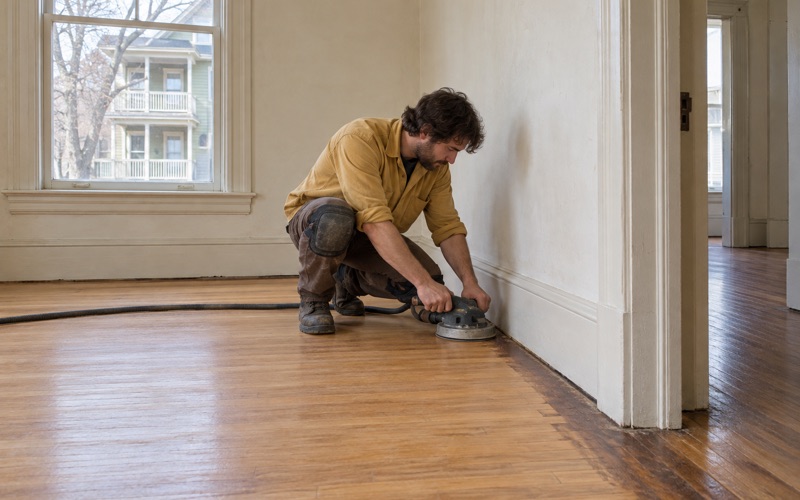
Worker running an edger along the baseboard of a Waltham two-family parlor where the drum sander cannot reach.

Wood Floor Refinishing

Sanding oak strip floors back to bare wood in Waltham homes, with wax residue tested and stain samples laid on your own floor before a color is chosen.

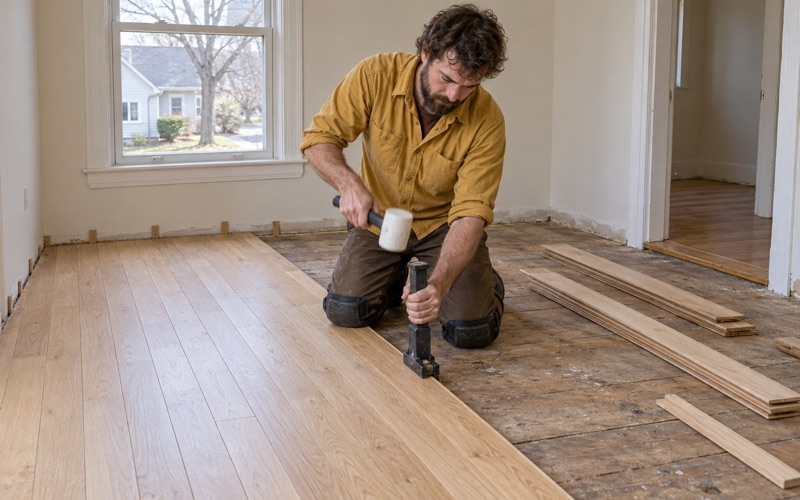
Worker striking a flooring nailer seated on the tongue edge of a white oak board in an emptied Waltham room.

Hardwood Floor Installation

Solid and engineered hardwood installed in Waltham homes, with subfloor flatness, moisture and fastener choice settled before the first board goes down.

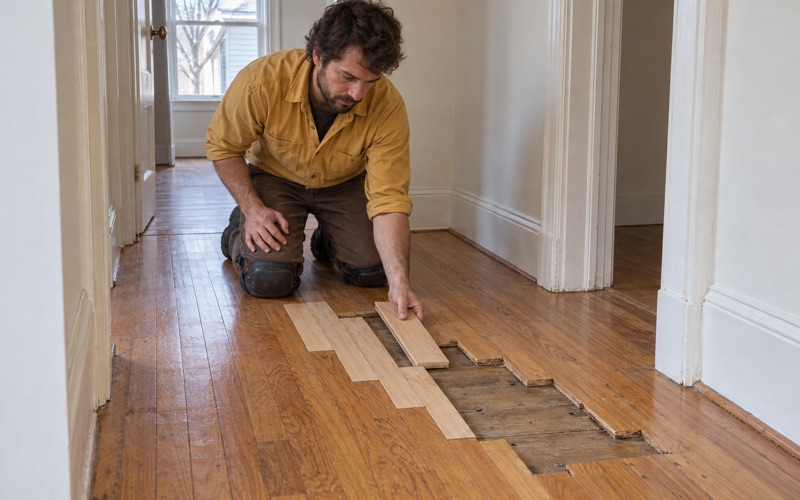
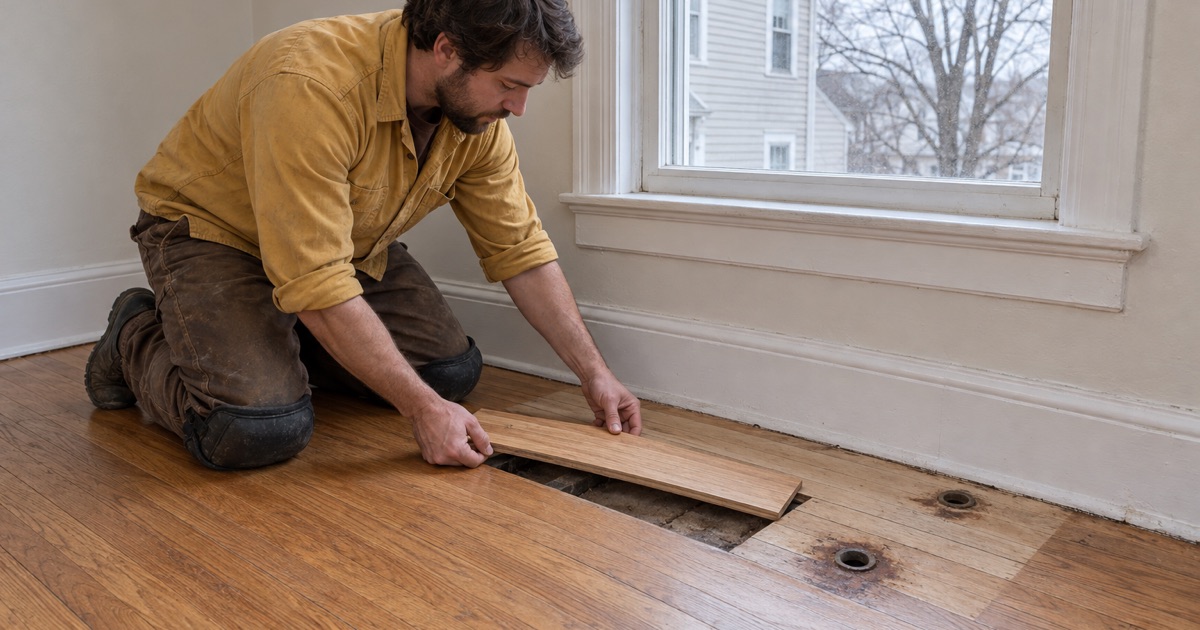
Worker dropping a new oak board into a staggered lace-in repair in a Waltham hallway floor.

Hardwood Floor Repair

Board replacement, radiator holes, squeaks and rot repaired in Waltham floors, with matching stock woven into the existing courses rather than filled.

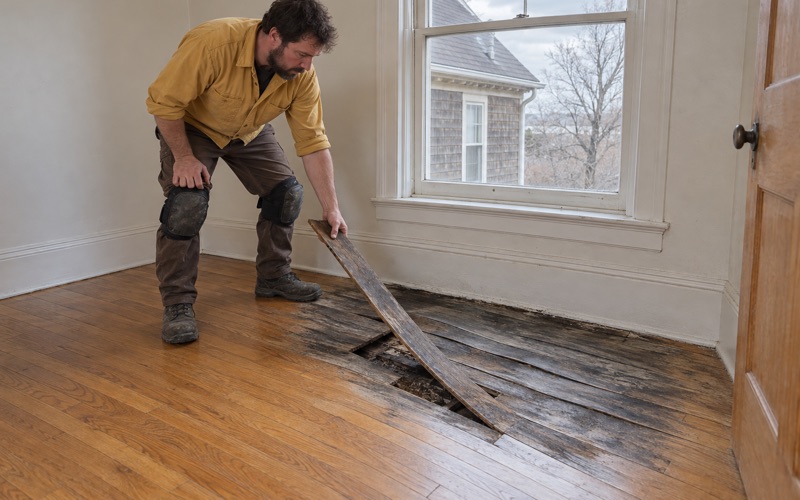
Worker lifting a dark, cupped oak board out of a stained area under a Waltham window.

Hardwood Floor Water Damage

Burst pipes, appliance overflows and wet lower levels traced and dried in Waltham homes, with moisture readings and photographs recorded for the claim.

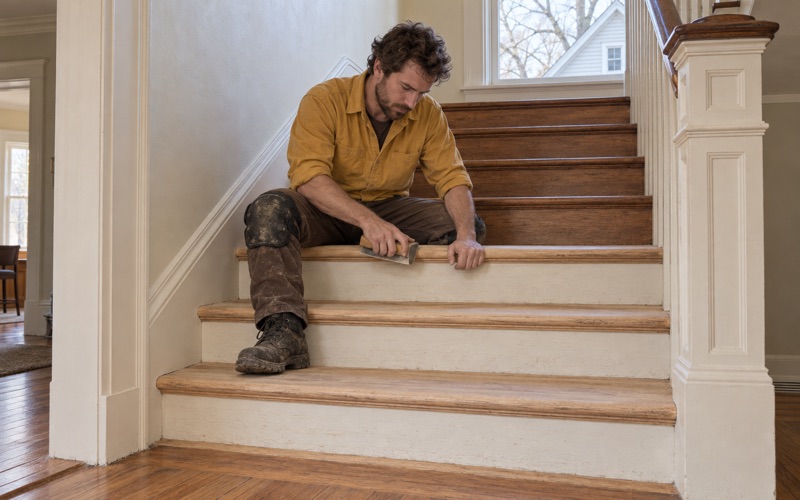
Worker sanding the nosing of an oak stair tread by hand in a Waltham center-hall staircase.

Hardwood Stair Refinishing

Treads, risers and nosings refinished or stripped in Waltham homes, priced step by step rather than by the square foot, with lead-safe work where needed.

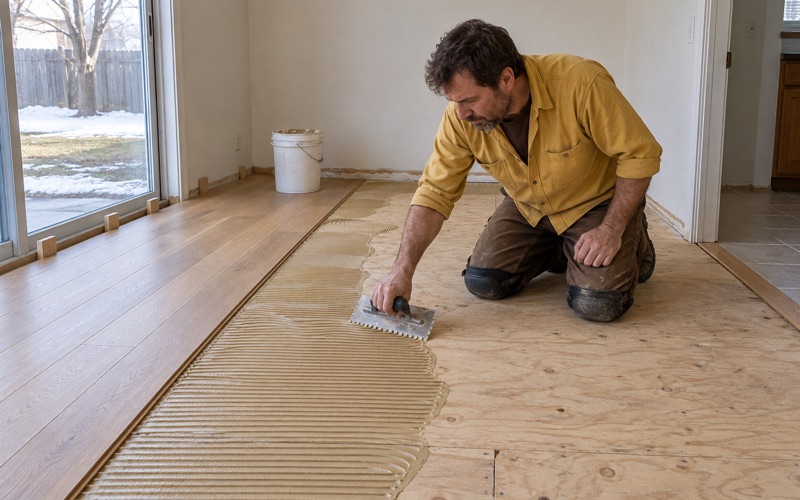
Worker spreading adhesive with a notched trowel over a plank subfloor before laying engineered oak in a Waltham room.

Engineered Hardwood Flooring

Engineered wood specified for Waltham basements and lower levels, with wear layer, core and installation method set by measured moisture readings.

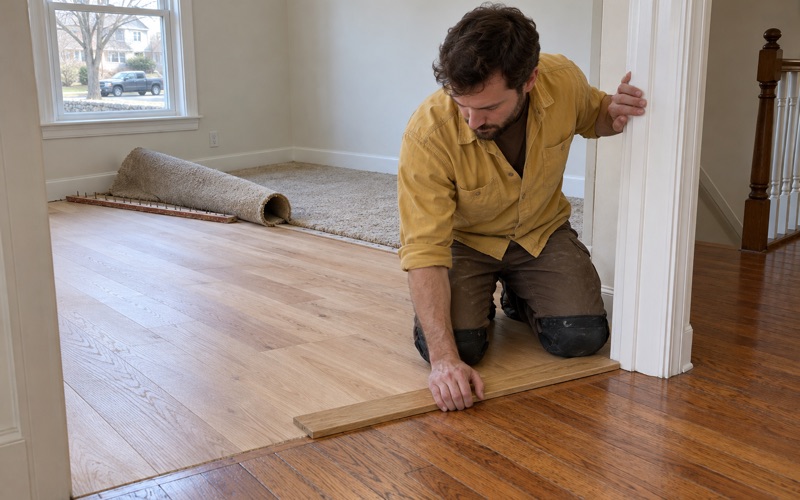
Worker seating a new oak threshold in a Waltham doorway where wall-to-wall carpet met the hall.

Replace Carpet With Hardwood

Carpet lifted, staples and tack strip cleared, and the subfloor checked before new hardwood goes into Waltham homes, or the oak underneath is brought back.

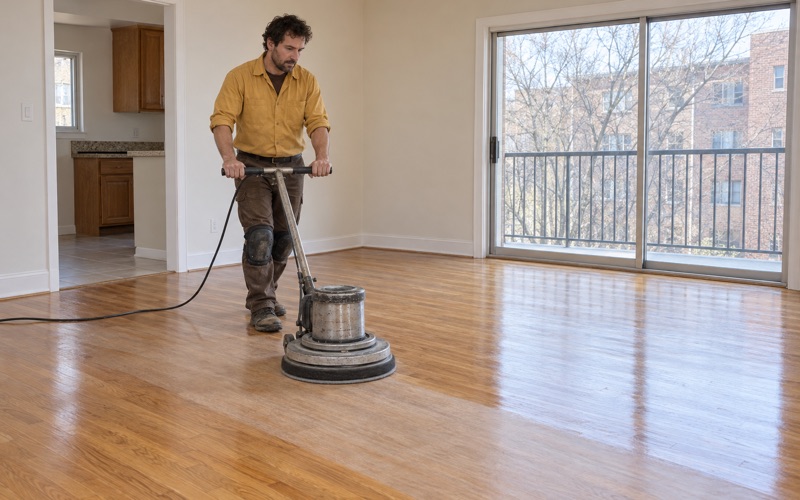
Worker running an upright buffer with a screening pad across an existing oak floor in an emptied Waltham condominium.

Screen And Recoat Hardwood Floors

A one-day refresh for Waltham floors whose wear is still in the coating, with the surface tested for wax and soap residue before anything goes down.

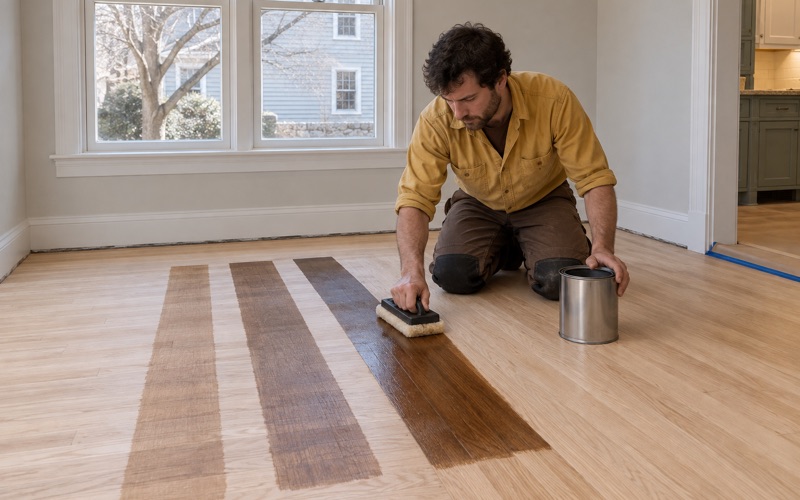
Worker wiping a stain sample across bare white oak with a lambswool block in a Waltham dining room.

Hardwood Floor Staining

Color chosen on your own sanded floor rather than a sample board, with grain raised first on maple and pine so the stain lands evenly across the room.

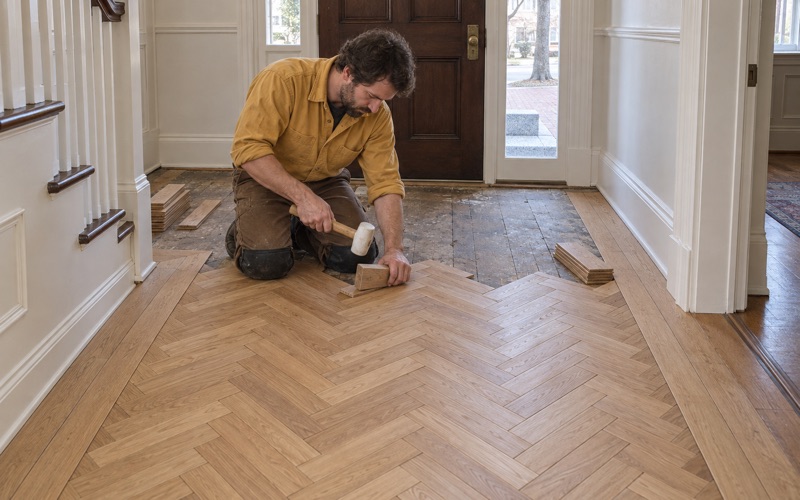
Worker striking a tapping block against the edge of a white oak herringbone block in a Waltham entry hall.

Herringbone Wood Floor

Herringbone, chevron and wide plank floors set out from a center line in Waltham homes, with pattern, waste and subfloor prep settled before installation.

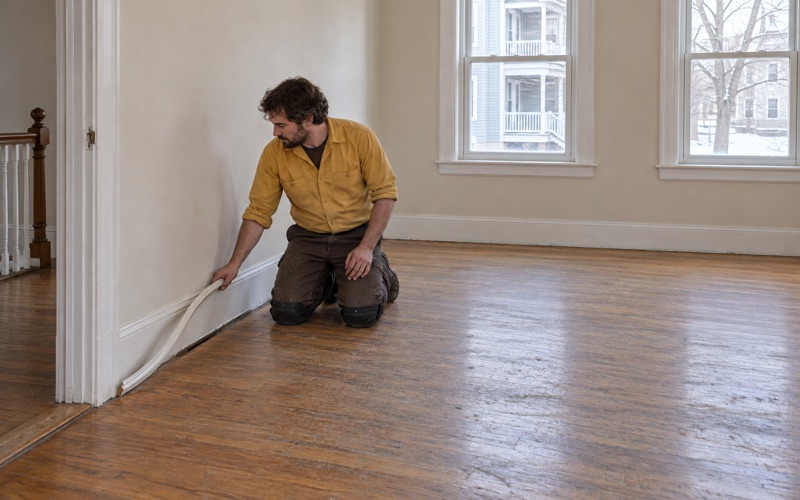
Worker easing a length of shoe molding off the baseboard of an emptied Waltham rental unit before refinishing.

Rental Property Floor Refinishing

Floors turned around between tenancies in Waltham, with the itemized written estimate a landlord needs before charging a tenant for anything beyond wear.

Twenty Years Of Wood Floors In One Market

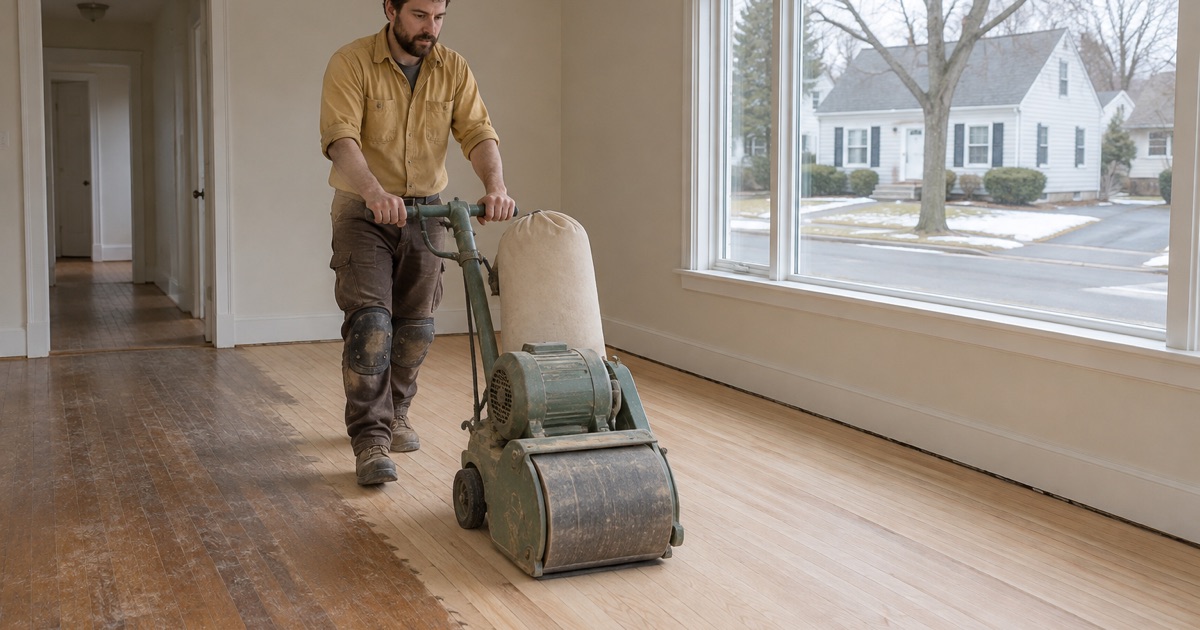
Worker walking a drum sander along red oak strip flooring in an emptied 1950s Waltham Cape, bare maples through the picture window.

20+ Years Working Massachusetts Floors

Two decades in one region is mostly a record of what the local building stock does. We have sanded enough Waltham oak to know where a floor laid in 1925 differs from one laid in 1958, which patches read as floor and which read as scars, and how a finish behaves over a subfloor that has moved through eighty winters of steam heat. That is the experience being sold here, not a marketing number.

Why Choose Waltham Wood Flooring

Build Year Checked First

Every house gets its build year and its painted surfaces checked before a machine is plugged in, because Massachusetts runs its own lead-safe renovation program under 454 CMR 22.00 rather than deferring to the federal rule, so painted stair risers and door casings are handled under HEPA exhaust as the regulation requires rather than opened up dry and spread through the house.

Board Thickness Measured

No postwar oak strip floor goes on the drum sander until we measure what is left of the wear layer at a register cut or a threshold. A 1950s floor already sanded twice gets a screen and recoat instead, so it keeps another fifteen years rather than losing its tongue and ending up with cleat heads standing proud of the boards.

Radiator Patches Woven In

Steam heat left round holes in floors across the 28.3 percent of Waltham’s units built before 1940, so every radiator and pipe penetration gets matching boards cut and woven into the existing run. The repair reads as floor from standing height rather than as a filled slug that telegraphs a ring through the finish inside a year.

Old Finishes Tested

Never assume what is on an old floor. Wax and cleaning-product residue is tested for and removed before any coating goes down, so a waterborne polyurethane bonds to the wood rather than staying tacky for weeks or peeling off in sheets the first time someone slides a chair across it.

Two-Families Kept Livable

Waltham has 6,138 units in two-, three- and four-unit buildings, which is 23.0 percent of everything here, and most of them are owner-occupied with somebody upstairs. We sequence those jobs one floor at a time, with work hours and dust control settled in advance, so the household on the other floor stays in the house rather than moving out for a week.

When The Floor Has Gone Wrong

Worker lowering a cut oak fill board into the pipe hole left where a cast-iron radiator was removed from a Waltham two-family floor.

Cupped And Buckled Boards After A Water Event

Cupping is boards taking on moisture from below and rising at the edges; buckling is the floor losing contact with the subfloor entirely. After a burst pipe or a dishwasher overflow we trace the source, dry the assembly and read it with a moisture meter over several days before any board is replaced. Sanding a floor that is still wet locks the cup in permanently.

Lower-Level Water And Below-Grade Flooring

Water in a finished basement is usually a vapor problem as much as a leak, and solid hardwood below grade will move no matter how well it is installed. We measure the moisture actually present in the slab or lower-level subfloor and match the material to it, which normally means an engineered floor over a vapor retarder rather than solid boards that cup by February.

Winter Gaps In Solid Strip Flooring

Board gapping that opens every heating season and closes in July is solid wood doing what solid wood does, not a defect in the installation. We measure the gaps at both extremes before recommending anything, because filling winter gaps in January guarantees compression damage in summer when the boards swell back against the filler.

Pet Urine Stains That Reached The Subfloor

Black pet urine stains are not surface marks; the salts have usually gone through the finish, through the wood and into the subfloor below. Sanding lightens them and rarely removes them, so we cut out and replace the affected boards, treat or replace the subfloor underneath, and weave new stock into the surrounding run.

Worn Traffic Lanes In Halls And Kitchens

Traffic lanes are where the finish has worn through and the bare wood underneath has started absorbing dirt. If the wear is still in the finish, a screen and recoat restores it in a day. Once the gray is in the wood itself, only a full sand to bare timber takes it out, and we tell you which one you have before quoting.

Squeaks, Popping And Loose Floorboards

Squeaks come from movement — a board against a cut nail, a subfloor panel against a joist, or flooring laid across a span it was never fastened tightly to. We locate the movement from below where there is access and fasten it there, rather than face-nailing through a finished floor and leaving a row of filled holes down the hallway.

Powderpost Beetle Exit Holes And Frass

Small round exit holes with fine powder-like frass below them mean powderpost beetle or old house borer activity, and the first question is whether it is active or historic. We identify what the holes and the frass are telling us, replace the compromised boards, and coordinate with a licensed pest operator for treatment rather than sanding over an infestation still working.

Rotted Subfloor At Toilets And Entry Doors

Soft spots at a toilet flange or just inside an exterior door are almost always slow leaks that reached the subfloor long before the finish floor showed it. We open the area, establish how far the rot runs, replace subfloor and joist material where it has gone, and only then lay new flooring into the opening.

Finish That Stayed Tacky Or Peeled

A new coat that never cured or lifted off in sheets is nearly always a bonding failure over old wax or a shellac finish, not a bad batch of polyurethane. We test the existing surface, strip the contaminant back to sound wood, and recoat with a finish chosen to meet the Massachusetts VOC limits in 310 CMR 7.25(11) for wood coatings.

Blotchy Stain On Maple And Eastern White Pine

Maple and eastern white pine are closed-grain and soft-grained woods that take stain unevenly, which is why a color that looked right on a sample board goes mottled across a room. We water-pop or condition those species and lay stain samples on your own floor in your own light before committing to a color across the whole space.

Bringing Back The Floor You Already Have

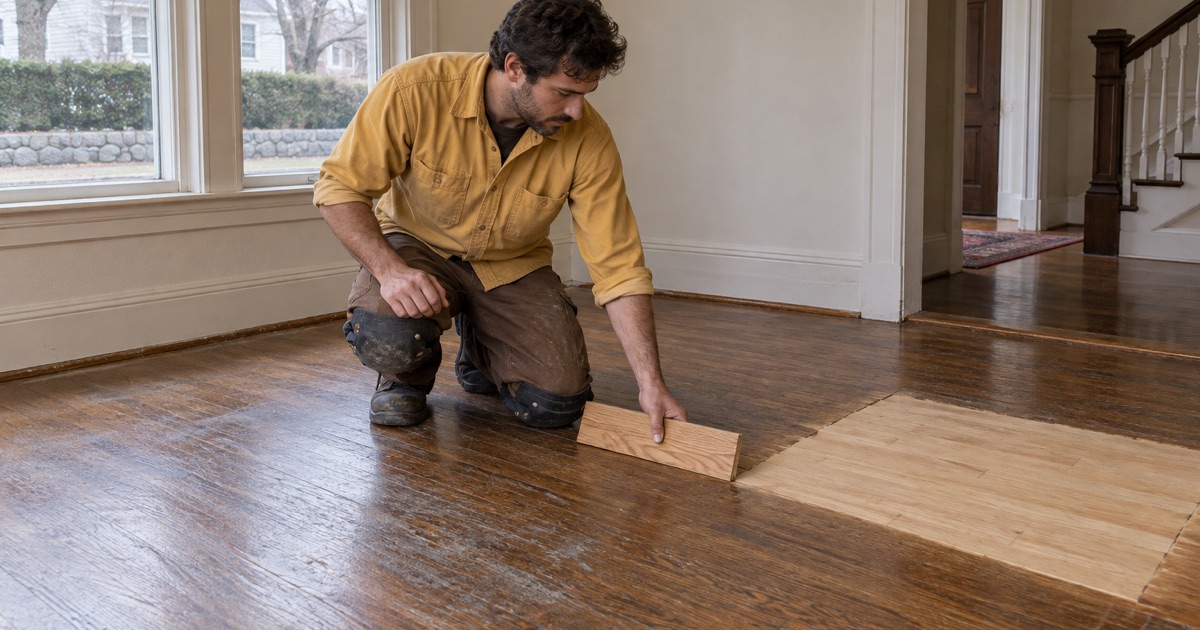
Worker holding a freshly sanded oak sample board against the old amber finish of a 1920s Waltham dining room floor.

Full Sanding Against A Screen And Recoat

A full sand takes the floor to bare wood through a grit sequence and rebuilds the finish from nothing; a screen and recoat abrades the existing coating and adds one layer over it. The second costs a fraction and takes a day, but it only works while the wear is still in the finish. We measure which one your floor qualifies for.

Oak Found Under Wall-To-Wall Carpet

Pulling carpet in a pre-1960 Waltham house very often uncovers red oak strip flooring in usable condition. The work is in what comes with it: carpet pad bonded to the finish, thousands of staples, and tack strip nailed along every wall. We remove all three without splintering the board edges, then assess what the oak underneath actually needs.

Radiator Removal Patches In Steam-Heated Houses

When steam radiators and their supply pipes come out, they leave round holes and an unfinished footprint where the radiator stood. We patch those with matching boards cut and woven into the existing courses, with grain and board width matched, so the repair disappears into the floor instead of sitting in it as a filled circle.

Weave-In Repairs Where A Wall Or Outlet Moved

Taking down a wall between a kitchen and a dining room leaves a strip of bare subfloor, and moving a floor outlet leaves a rectangle. Both get the same treatment: boards let into the opening, staggered into the surrounding run so no seam lines up, then the whole area sanded flat as one floor and finished together.

Orange Oak Taken Back To A Natural Color

The orange oak look is not the wood; it is decades of ambered oil-modified polyurethane or old shellac over red oak. Sanding to bare wood removes it, and finishing with a waterborne polyurethane keeps the floor close to its natural tone rather than pushing it back toward amber within a few years.

Wide-Gapped Eastern White Pine Floors

Old pine floors in Waltham’s earliest houses come with wide gaps, splinters, and a surface that has been walked on for well over a century. They need a gentler grit sequence than oak because the wood is soft, and decisions about which gaps to fill and which to leave are made room by room rather than as a blanket policy.

Wax And Soap Residue Testing

Floors maintained for decades with paste wax or an oil soap carry a residue that no finish will bond to, and it is invisible. We test the surface in several places before quoting a recoat, because a floor that tests positive needs full stripping or a sand to bare wood, and that changes both the price and the schedule.

Hardwood Stair Refinishing, Tread By Tread

Stairs are quoted tread by tread, because a staircase is not priced by the square foot — treads, risers, nosings and any painted surfaces each carry different labor. Painted stairs built before 1978 add a further step, since stripping paint falls under Massachusetts lead-safe renovation rules rather than ordinary sanding.

Dustless Sanding, Fumes And Living In The House

Dustless sanding means the machines run to HEPA vacuum extraction rather than a bag, which is also what 454 CMR 22.11(9)(a) requires when painted surfaces are involved. We seal the work area, plan the finish schedule around when the household needs each room back, and tell you honestly which nights are comfortable to stay and which are not.

Refinishing Before A House Goes On The Market

Refinishing before listing is a timing problem more than a flooring problem: the floor has to be cured and walkable before photographs, staging and the first open house. We build the schedule backward from your listing date and are direct about which rooms are worth doing and which are better left for the buyer.

Putting In New Wood Floors

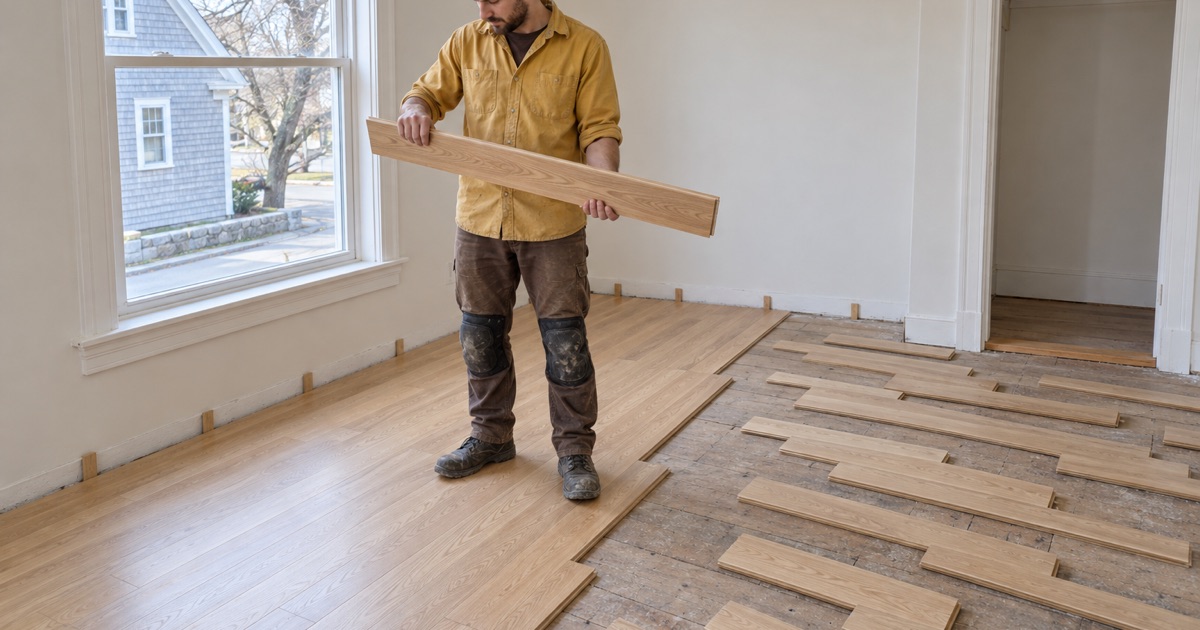
Worker holding a white oak board on edge to read its color against a part-laid floor in an emptied Waltham bedroom.

Solid Hardwood, Engineered Wood And Vinyl Plank Compared

Solid hardwood can be sanded many times and is the right answer on and above grade; engineered wood has a limited wear layer but holds its shape where moisture varies; luxury vinyl plank is neither and cannot be refinished at all. We compare them against where the floor is going and what you want it to still be doing in twenty years.

Replacing Carpet With Hardwood, Room Or Whole Floor

Replacing carpet with hardwood is straightforward in one room and a sequencing problem across a whole floor, where thresholds, appliance moves and living arrangements all matter. We check the subfloor flatness and fastening once the carpet is up, because a floor installed over a subfloor that was never flat will telegraph every dip.

Carpeted Stairs Converted To Treads And Risers

Carpeted stairs usually hide construction-grade stringers and rough treads never meant to be seen. Converting them means new hardwood treads, risers and nosing cut to each step, since a staircase in an older Waltham house is rarely uniform enough to use stock parts straight out of the box.

Engineered Hardwood Flooring Below Grade

Below grade, the controlling fact is vapor coming up through the slab or the lower-level subfloor, and no installation method overcomes it. We take moisture readings first, then specify an engineered floor with an appropriate wear layer over a vapor retarder, floated or glued according to what the readings and the substrate actually allow.

Prefinished Against Site-Finished Flooring

Prefinished flooring arrives coated with micro-beveled edges, installs in a day and has no finish odor; site-finished is sanded flat after installation, so the surface reads as one plane and any future recoat matches. The trade is speed and disruption against a seamless surface, and we lay both out before you order material.

Herringbone And Chevron Pattern Floors

Herringbone sets rectangular blocks at right angles; chevron cuts the ends on an angle so the points meet in a continuous V. Both need a laid-out center line, more waste than a straight run, and more labor, and both are worth doing properly in a house whose other details are of that period.

Wide Plank White Oak And Hickory

Wide plank moves more across its width than strip flooring, so acclimation and expansion gaps matter more, not less. White oak is harder and more dimensionally stable than red; hickory is harder again with far more color variation board to board. We show you a laid-out sample run rather than a single plank before anything is ordered.

Weaving New Boards Into An Existing Floor

When an addition or a removed wall means new flooring meeting old, the seam is where the job is judged. We rack the new stock into the existing courses in a staggered pattern, match board width and grain direction, then sand the two areas as one surface so the finish reads continuously across the join.

Nail-Down, Glue-Down And Floating Installations

Nail-down suits solid wood over a wood subfloor; glue-down is for engineered material over concrete or where sound transmission matters; floating installs fastest and is the only option over some underlayment assemblies. The subfloor and the building decide which is available, not preference, and a condominium’s own rules often narrow it further.

Flooring Cleats Against Staples

Cleats are barbed L-shaped fasteners that flex slightly as the board moves; staples grip harder and hold the board more rigidly. On wider or denser material cleats are usually the safer choice, because a staple that will not let the wood move at all is what produces splits at the tongue a season later.

Rentals, Condos, Landlords And Claims

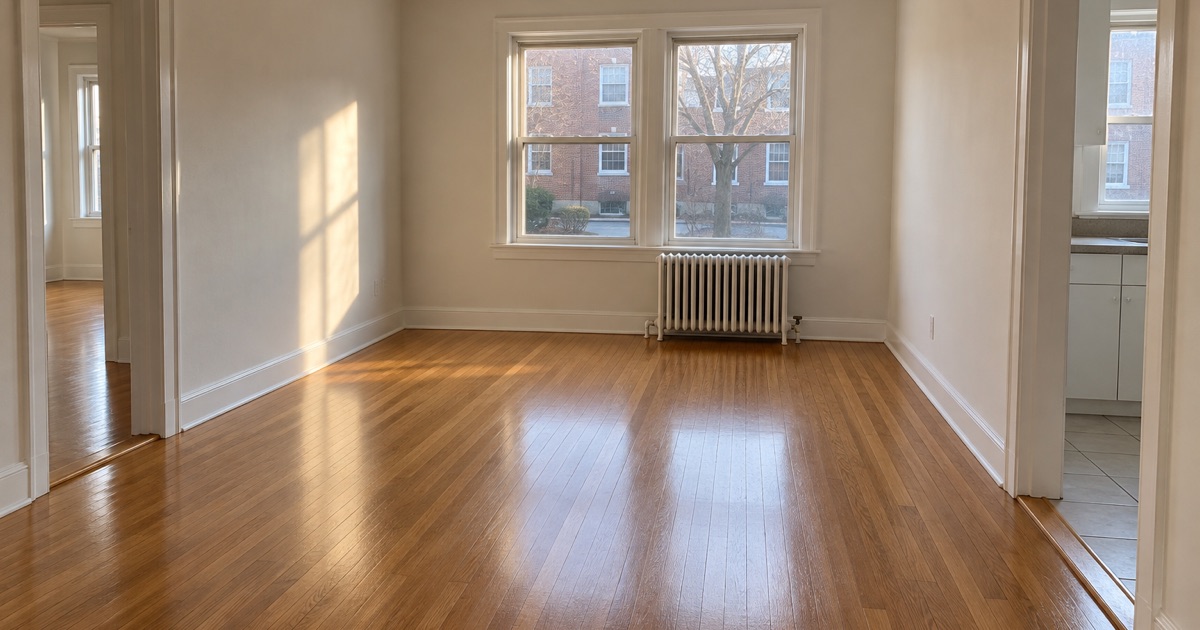
An emptied Waltham apartment with a freshly finished red oak floor and a cast-iron radiator under the window, ready to be let.

Rental Turnover Refinishing Between Tenancies

With 50.3 percent of Waltham’s occupied units renter-occupied, turnover work runs to a calendar rather than a preference. We scope the floor against the vacancy window, tell you plainly whether a screen and recoat will carry the unit another tenancy or whether it needs a full sand, and schedule to the date the next lease starts.

Normal Wear And Tear And The Itemized Estimate

Massachusetts does not let a landlord charge a tenant for ordinary wear, and a charge for real damage needs an itemized written estimate behind it. We write estimates that separate wear from damage line by line, describing the condition and the work for each area, so the document holds up as the record it is meant to be.

Condominium Floor Rules And Underlayment

Condominium floor requirements live in the association’s master deed, bylaws and rules adopted under M.G.L. c.183A, not in the building code, and they commonly specify underlayment performance for hard-surface floors above another unit. We ask for those documents before quoting, because a rule you find after installation is an expensive thing to discover.

A Leak From The Unit Upstairs

When water comes down from another unit, the flooring question and the liability question are separate, and the answer to the second sits in the condominium documents and the two insurance policies. We document what the water did to your floor, quantify the repair, and stay out of the argument about who pays for it.

One Floor Of A Two-Family While The Other Is Lived In

Waltham has 2,921 two-unit and 3,217 three-or-four-unit buildings, and plenty of them are owner-occupied. Refinishing one unit while the other is occupied means containment at the stair door, extraction rather than open dust, and a finish schedule agreed with the household that is staying, so nobody has to leave.

Lead-Safe Work In Homes Built Before 1978

The Waltham Consolidated Plan for fiscal year 1995 estimated roughly 19,000 city housing units built before 1978 and therefore possibly containing lead-based paint. Where painted surfaces are disturbed beyond the threshold set in 454 CMR 22.11(1), the job is Renovation Work under the state program and is handled as such rather than as plain sanding.

Resilient Floor Tile And Black Mastic Under Carpet

Lifting carpet in an older house frequently exposes nine-inch resilient floor tile set in black mastic, both of which may contain asbestos. We identify what we have found, stop, and leave it undisturbed until the right licensed trade has handled it, rather than scraping it up and turning a flooring job into an exposure.

Documenting Floor Damage For The Adjuster

Adjusters work from records, so we document water-damaged floors room by room: moisture readings with dates, the extent of cupping or buckling, photographs of the affected areas and an itemized repair scope. That documentation is what separates a covered claim settled promptly from one argued over for months.

What A Standard Policy Covers Below Grade

Policies treat a sudden discharge differently from seepage and groundwater, and below-grade coverage is often limited or excluded outright. We can tell you what the floor shows and what caused it; what your specific policy covers is a question for your carrier, and we will give you the documentation either way.

Work Hours, Noise And Neighbors During Sanding

Sanding is loud, and in a three-decker or a condominium building the neighbors hear all of it. We agree working hours before the first machine runs, give notice where a building requires it, and keep equipment and material staged so stairs and common hallways stay usable while the work is going on.

Areas We Serve

Waltham Wood Flooring provides wood-flooring throughout the greater Waltham area, with the same crews and the same standards on every job.

Good to know

Frequently Asked Questions

How much does it cost to refinish a hardwood floor in Waltham?

Pricing depends on square footage, the species and condition of the wood, how many repairs are needed before sanding, the number of coats, and whether stain is involved. A screen and recoat costs a fraction of a full sand to bare wood, and stairs are quoted separately because they are priced tread by tread rather than by the square foot. Every job gets a written itemized estimate before any work starts, so you can see what each part of it costs.

How long does a full refinishing job take from start to finish?

Sanding and coating a typical set of rooms runs several days, and the controlling factor afterward is cure time rather than application time. A waterborne polyurethane is walkable sooner than an oil-modified one, but both need time before furniture and rugs go back down. We give you a schedule with the specific dates for each stage so you can plan around the rooms you need.

Do I need to move out while my floors are being refinished?

Usually no. We seal the work area, run the sanders to HEPA vacuum extraction rather than a dust bag, and sequence the rooms so there is somewhere to sleep and somewhere to cook. Finish odor is the bigger factor than dust, and it depends on which product the floor is getting. We tell you before the job which nights are genuinely comfortable to stay.

Can my floor be sanded again, or has it been refinished too many times?

It depends on how much wood is left above the tongue, which we measure at a heat register cut, a threshold or a stair nosing rather than estimating. Floors laid in the 1950s and 1960s are thinner than prewar stock to begin with, so a postwar floor that has already been sanded twice is usually a screen and recoat candidate instead of a third full sand.

What finish do you use, and does Massachusetts restrict the options?

We use waterborne polyurethane, oil-modified polyurethane and hardwax oil depending on the floor, the traffic and the sheen you want. Massachusetts sets its own VOC limits for wood coatings in 310 CMR 7.25(11), which are stricter than the federal ones, so every product we put down is chosen to comply with the state limit rather than the national one.

What are the rules for sanding painted surfaces in an older house?

Massachusetts administers its own lead-safe renovation program under 454 CMR 22.00 instead of deferring to the federal EPA rule. Disturbing more than six square feet of painted surface in a room of a pre-1978 home makes the job Renovation Work under that regulation, and power sanding painted surfaces without HEPA exhaust is prohibited under 454 CMR 22.11(9)(a). We check the build year and any painted surfaces before quoting.

Is there hardwood under my wall-to-wall carpet?

In Waltham there often is. About 49.2 percent of the city's housing units were built before 1960, and red oak strip flooring was standard in that era, so carpet laid in the 1970s or 1980s frequently sits on top of a usable floor. We can lift a corner in a closet or along a wall to find out before you commit to anything.

What species and patterns can you install?

Red oak, white oak, maple, hickory and eastern white pine in strip, plank and wide plank, in both solid and engineered construction, prefinished or site-finished. Patterns include herringbone, chevron, and rift and quartersawn material where a straighter grain is wanted. Species choice is a question of Janka hardness, how the wood takes stain, and where in the house the floor is going.

Can you install hardwood in a basement or a finished lower level?

Solid hardwood below grade is not a good idea regardless of how carefully it is installed, because vapor moving up through the slab will cup it. We take moisture readings in the space first and then specify an engineered floor over a vapor retarder, sized and fastened for what those readings show, which is what actually holds its shape down there.

Do you work with landlords and condominium owners?

Regularly. For landlords we write itemized estimates that separate ordinary wear from chargeable damage, which is what Massachusetts requires before a tenant can be billed for a floor. For condominium owners we ask for the association's rules and underlayment requirements adopted under M.G.L. c.183A before quoting, because those documents often decide the installation method.

Ready to Get Started?

Request a free quote today and we'll get back to you fast.